Natasha loves keeping fit and active. She spends as much time as she can outdoors, hill walking with her two dogs, mountain biking or kayaking, and practises yoga several times a week. In June 2022, she started to notice changes. She had a hoarse voice, squeaky breathing and a cough that wouldn't go away. She was losing weight and felt extremely tired.
“I had a persistent cough, a hoarse voice and was losing weight. I was initially diagnosed with TB.”
A quick referral from her GP
Natasha's GP was excellent, and referred her for a chest X-ray. But in October 2022, she was misdiagnosed with tuberculosis, and time went into looking for TB and other infections. In December 2022, she was diagnosed with stage 3 EGFR-positive lung cancer. Confusion over her treatment plan led to more delays. By the time her treatment was about to begin, she had started having headaches. In January 2023, she was restaged as stage 4, with the cancer in her brain. Her planned surgery was abandoned, and she started targeted therapy.

Thinking of lung cancer sooner
Natasha wishes lung cancer had been investigated from the start, rather than time being spent ruling out TB and other infections. Her symptoms, from a hoarse voice to weight loss, are all known signs of lung cancer.
Living well with lung cancer
Today, Natasha feels lucky and grateful that her body still lets her do the things she loves. Yoga, gardening, walking her dogs and being outdoors all help her feel grounded, and yogic breathing helps calm her mind when she feels anxious. Her family and friends are her lifeline, from lifts to appointments to coffee and cake when she needs to talk. Connecting with others online who understand what she is going through has given her strength and hope. She describes her lung cancer nurse specialist as phenomenal, and her oncology team explain things clearly, so she can take part in decisions about her care. The healthcare professional side
The healthcare professional side
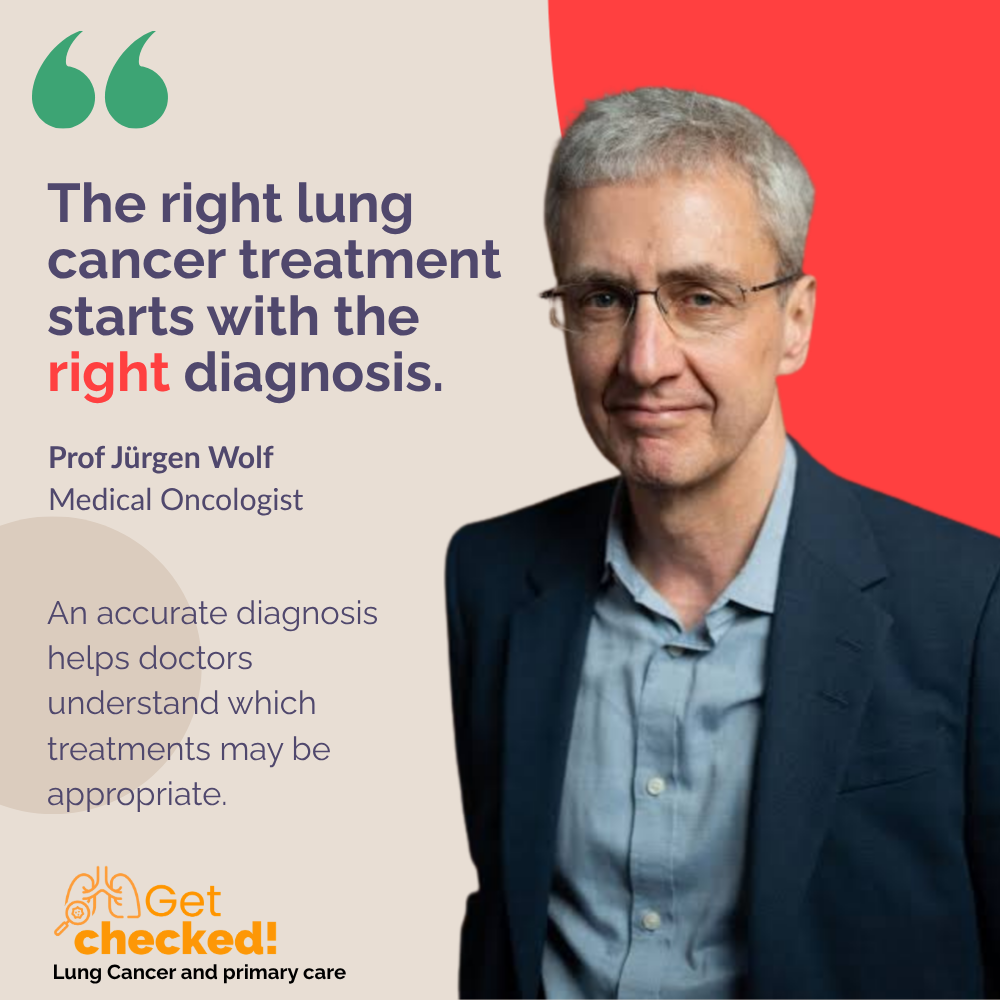
Professor Jürgen Wolf, a medical oncologist, explains why the right diagnosis, including testing for changes like EGFR, leads to the right treatment.