
Going to primarycare
For most people, a GP or family doctor is the first person they talk to about a symptom. It is where possible lung cancer is first recognised, and where the path to a diagnosis begins. Lung cancer symptoms often look like more common illnesses, such as a chest infection, allergies or long Covid. Doctors in primary care see many people with coughs and breathlessness, and only a few with lung cancer. That can make it hard to spot.

Why a faster lung cancer diagnosis is so important
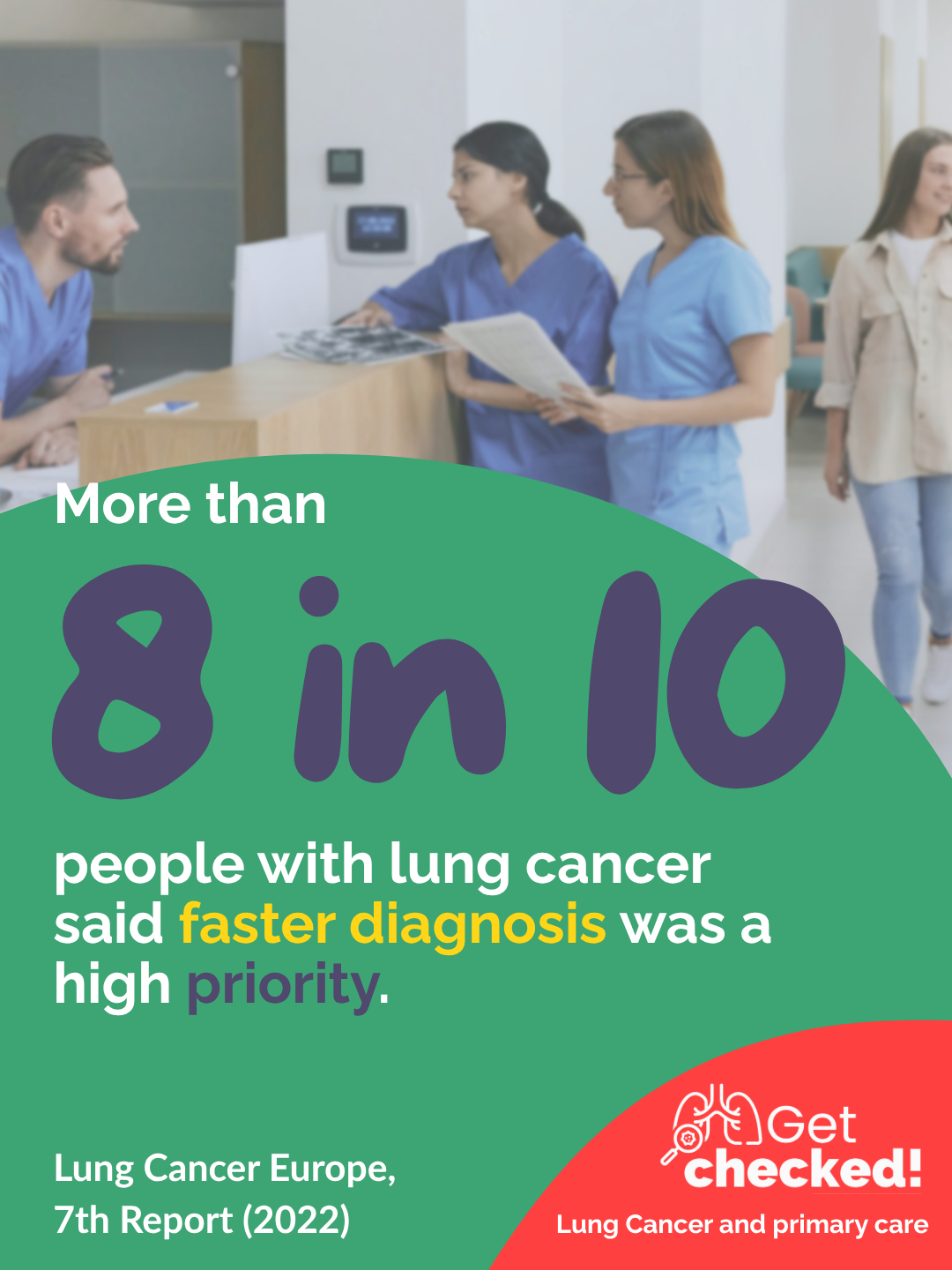
People with lung cancer tell us that getting an answer quickly is one of the things they care about most. Primary care is where that journey starts, and every step after it depends on lung cancer being considered early.
When symptoms were put down to something else
Many people saw their doctor more than once before lung cancer was considered.
Why lung cancer isn't always on a GP's radar
“GPs usually may only see one or two lung cancer patients a year, and even less mesothelioma patients.”
When someone comes in with breathlessness, weight loss or a cough, a GP will usually look first for chest infections and other common causes. It is rarely anyone's fault, but it is why symptoms that don't go away need another look. It can be even harder for people who have never smoked, because the usual warning signs aren't there.
Stories about primarycare






Getting the most from your appointment
It can help to note down:
What has changed, and when it started
Whether it is getting better, worse or staying the same
Anything you have already tried, and whether it helped
Anything that worries you, so you remember to say it
You can also bring someone with you. And if you have been treated for something like an infection and your symptoms haven't gone away, go back and tell your doctor. Don't wait for it to feel serious. If something doesn't feel right and it isn't going away, get it checked.
From first symptom to diagnosis
Five stages, each told from both sides.
- Noticing something When something changes, and deciding what to do about it
- Going to primary care The first appointment, from both sides of the desk
- Suspected lung cancer When a scan shows something, but there is no answer yet
- Tests and getting an answer Scans, biopsies and the team keeping everything moving
- Diagnosis and what comes next The right diagnosis, and the support that follows