Why lung cancer isn’t always on a GP’s radar
Rachel Thomas is a registered nurse who has spent more than 20 years caring for people and families affected by mesothelioma and lung cancer, in the NHS, in hospices and in the community. She is the Community Mesothelioma Nurse Specialist at HASAG, a charity supporting people affected by asbestos-related disease, where she visits people at home and works alongside local lung cancer nurses, palliative care teams, GPs, district nurses and social workers.
Rachel has published on lung cancer, speaks at national and international conferences on caring for people with mesothelioma, and is a committee member of the International Thoracic Forum for Nurses, helping to educate nurses around the world.
When the diagnosis comes
Rachel cares for people who have just been diagnosed with lung cancer or mesothelioma, a cancer most often linked to asbestos. She often sees anger, overwhelming distress, shock and real trauma at this point. Many people tell her they went to their GP several times, felt they were fobbed off with antibiotics, and waited a long time for a chest X-ray.
Not on the radar
Rachel explains to the people she supports why this can happen.
So when someone comes in with breathlessness, weight loss or a cough, lung cancer is not always the first thing a GP thinks of. Their usual first step is to look for chest infections and other common causes. In some cases, Rachel says, that can lead to a later diagnosis. It is rarely anyone's fault, but it is why symptoms that don't go away need another look.
“ GPs usually may only see one or two lung cancer patients a year, and even less mesothelioma patients.”
Harder still without the usual triggers
Rachel finds this is an even bigger issue for people with mesothelioma and for people with lung cancer who have never smoked. A history of smoking, or of asbestos exposure, can prompt a GP to think of lung cancer or mesothelioma. Without those triggers, the signs are easier to put down to something else.
A voice in what comes next
After the shock of diagnosis, Rachel sees her role as supporting people through it and helping them start their journey, so they can make shared decisions about their treatment and have a voice in their whole treatment plan and the future ahead.
What this means for you
Lung cancer can affect anyone with lungs, including people who have never smoked. If you have symptoms that don't go away, or keep coming back after treatment, go back to your doctor. It can help to tell them if you have ever smoked, or if you have ever been exposed to asbestos at work or at home, so they can consider every possibility.
The lived experience side
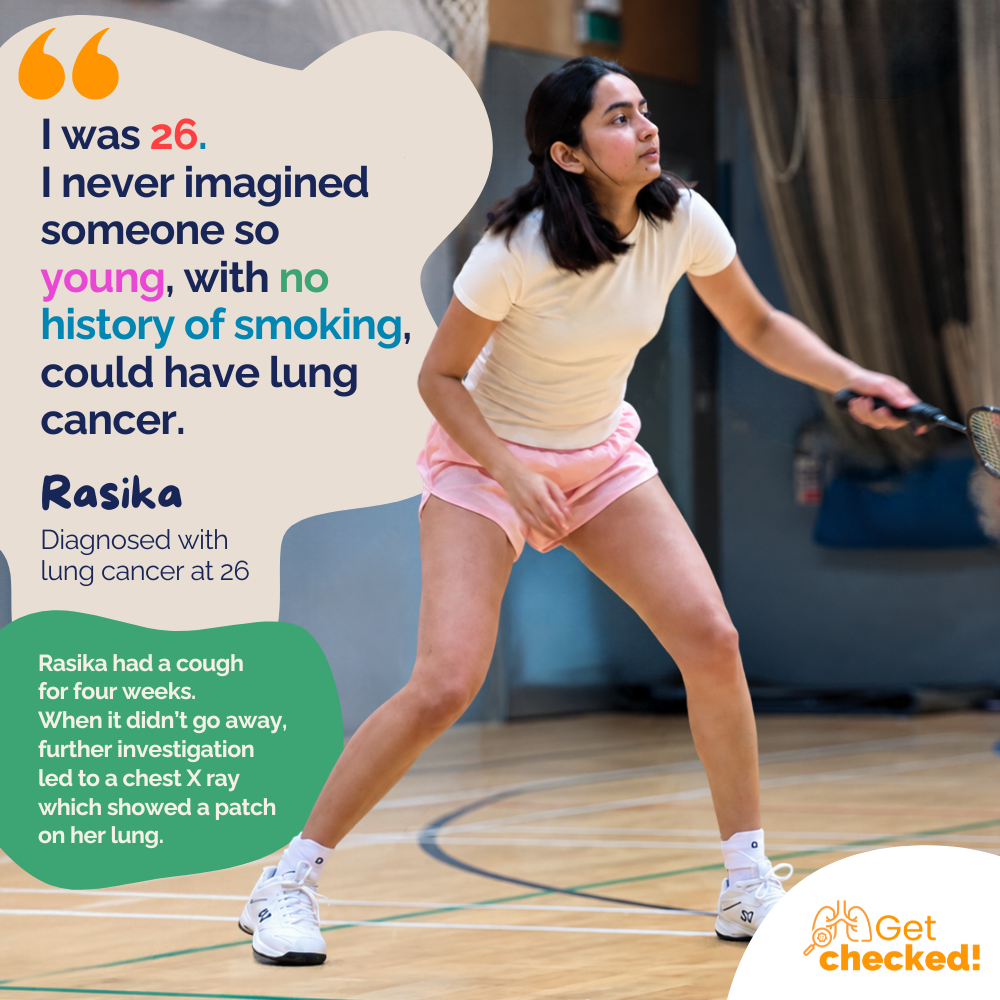
Rasika was 26 and had never smoked when a cough that wouldn't go away turned out to be lung cancer. At first, her doctors put it down to allergies or Covid.