
Let's Talk About the Symptoms of Lung Cancer
Don’t wait for it to feel serious. If it’s not going away, get it checked.
Lung cancer can be hard to spot early, but noticing the signs could save your life - or someone else's.
It doesn’t just affect older people or smokers. Lung cancer can happen to anyone, at any age, including people who’ve never smoked. That’s why it’s important to know the symptoms and take them seriously if they don’t go away.
Some signs are more obvious, like a cough that won’t shift. Others - like feeling tired or losing weight - are easier to miss or explain away. But if something doesn’t feel right, especially if it sticks around, don’t ignore it. Speak to your doctor.
Most of the time it won’t be cancer. But if it is, spotting it early means better options and a better chance of successful treatment.
What symptoms should I watch out for?
Some signs of lung cancer are well-known. Others aren’t.
You don’t need to have all the symptoms — or even a cough — to have lung cancer. That’s why it’s important to know what to look out for and take it seriously if something feels off.
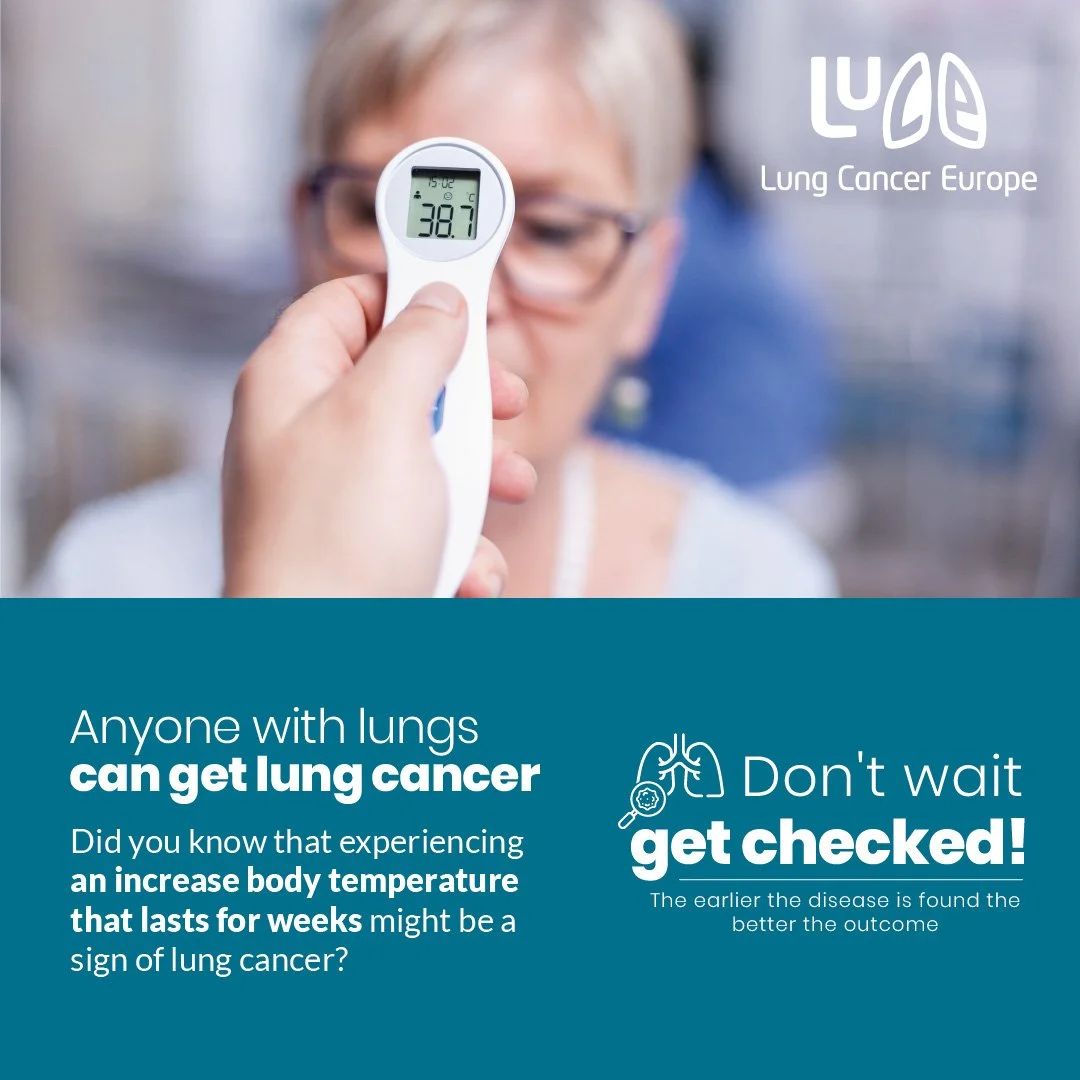
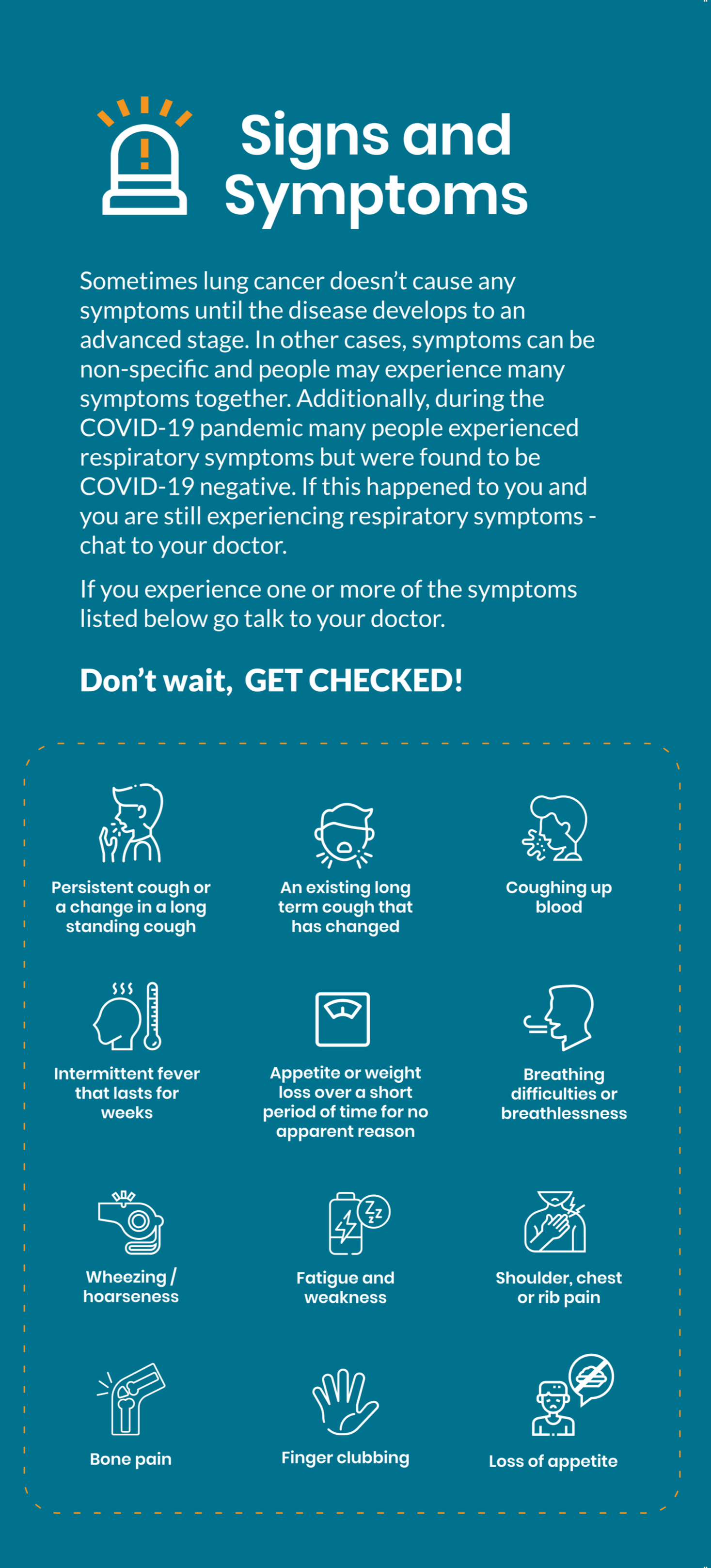
These are the most common symptoms. If one or more lasts for more than 3 weeks, speak to your GP:
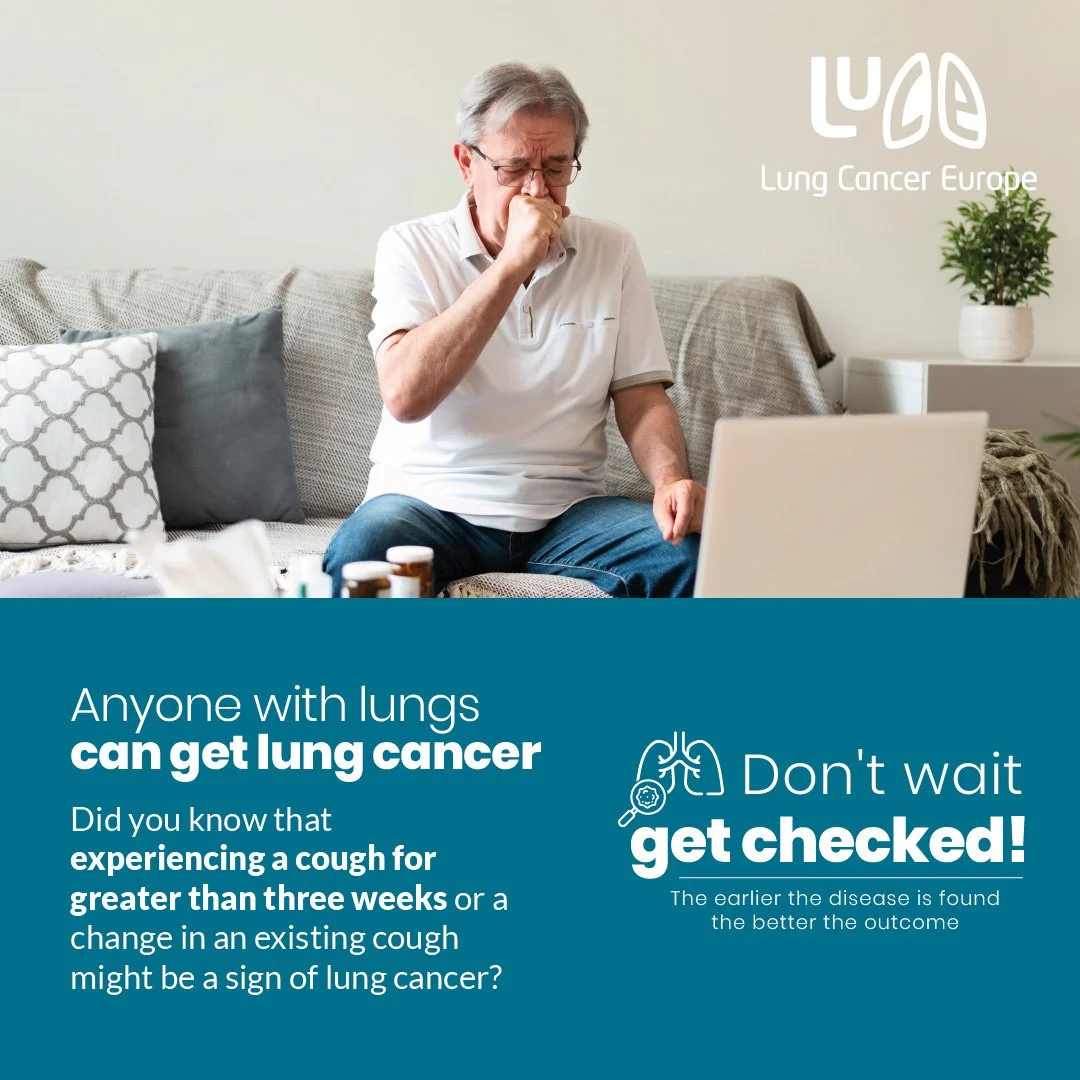
A persistent cough
Shortness of breath
Chest or shoulder pain
Feeling more tired than usual
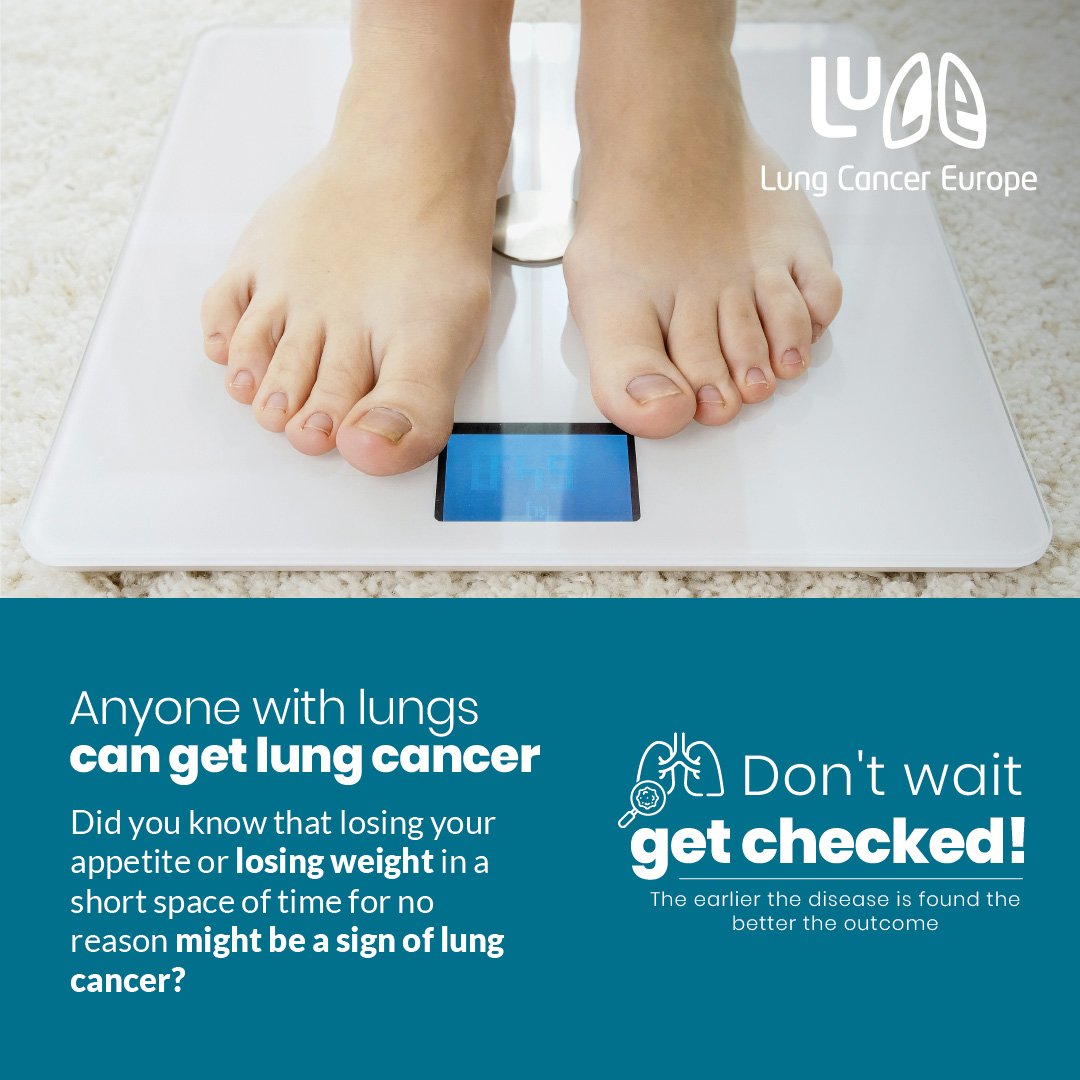
Unexplained weight loss
Coughing up blood (even a small amount)
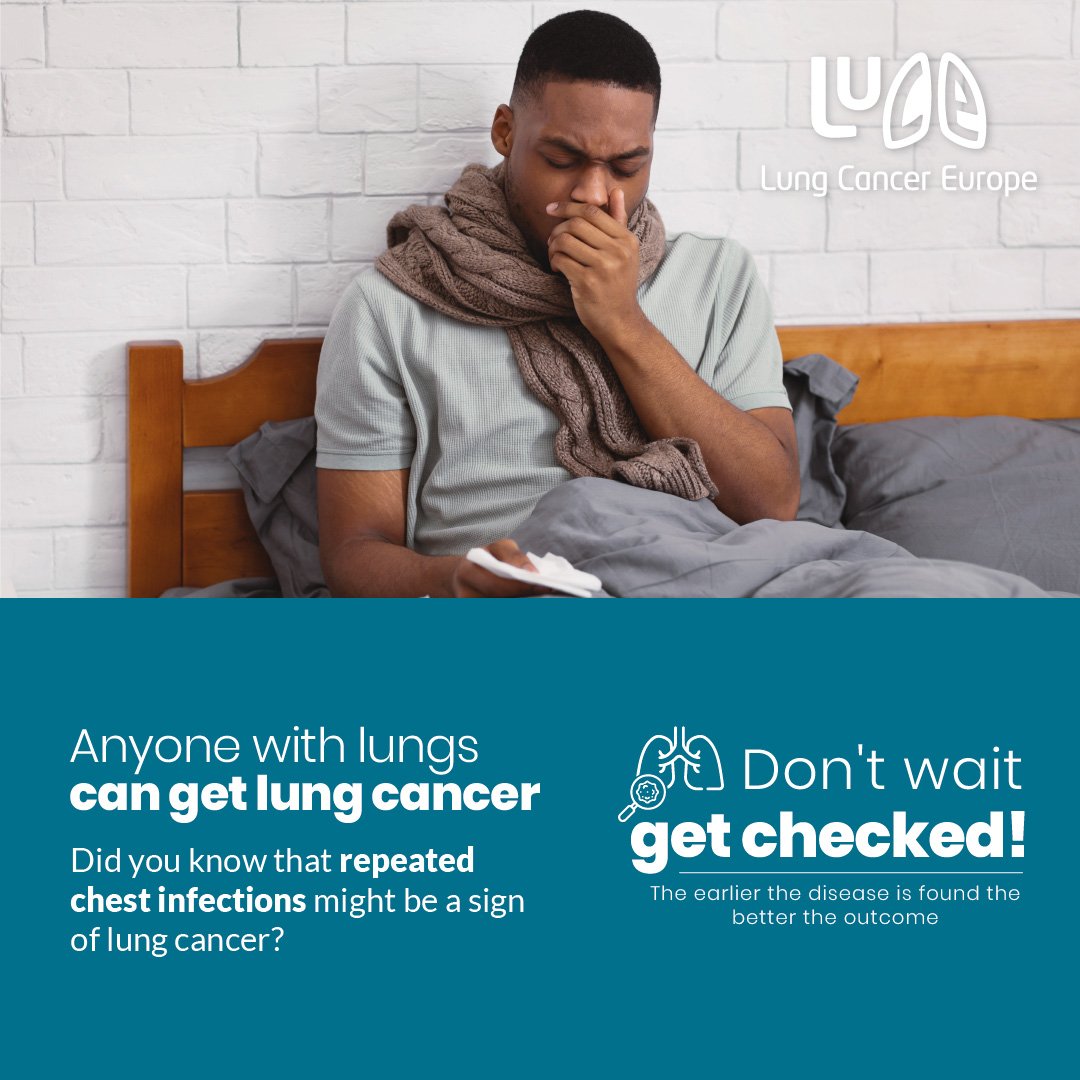
Frequent chest infections
Hoarseness or a change in your voice
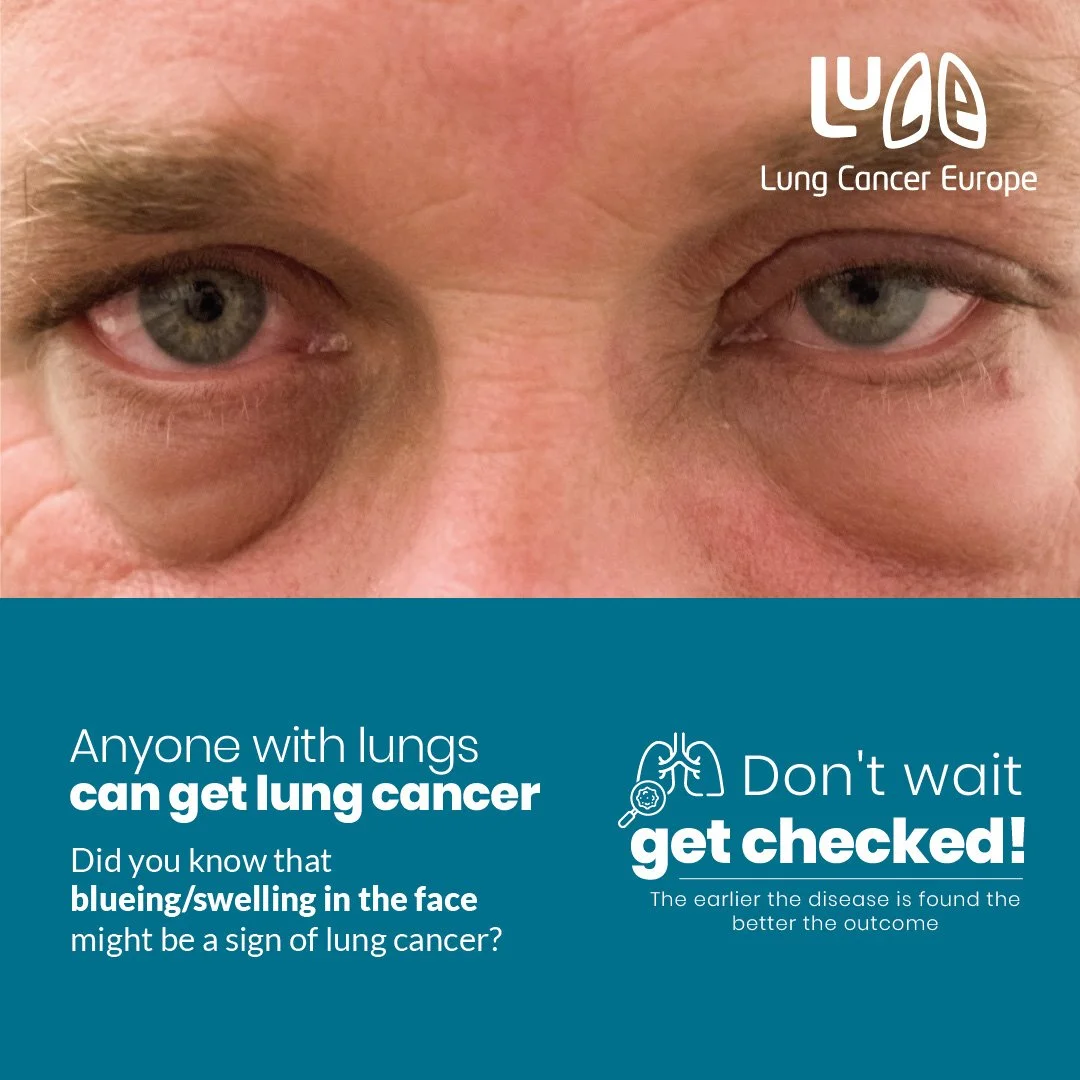
Swelling in the neck or face (especially around the eyes)
No symptom is too small if it sticks around. Lung cancer is easier to treat when caught early.
Anyone can get lung cancer - even if you’ve never smoked or have no family history.
But some things are known to increase your risk.
These are called risk factors. Having one or more doesn’t mean you will get lung cancer - but they’re worth knowing about.
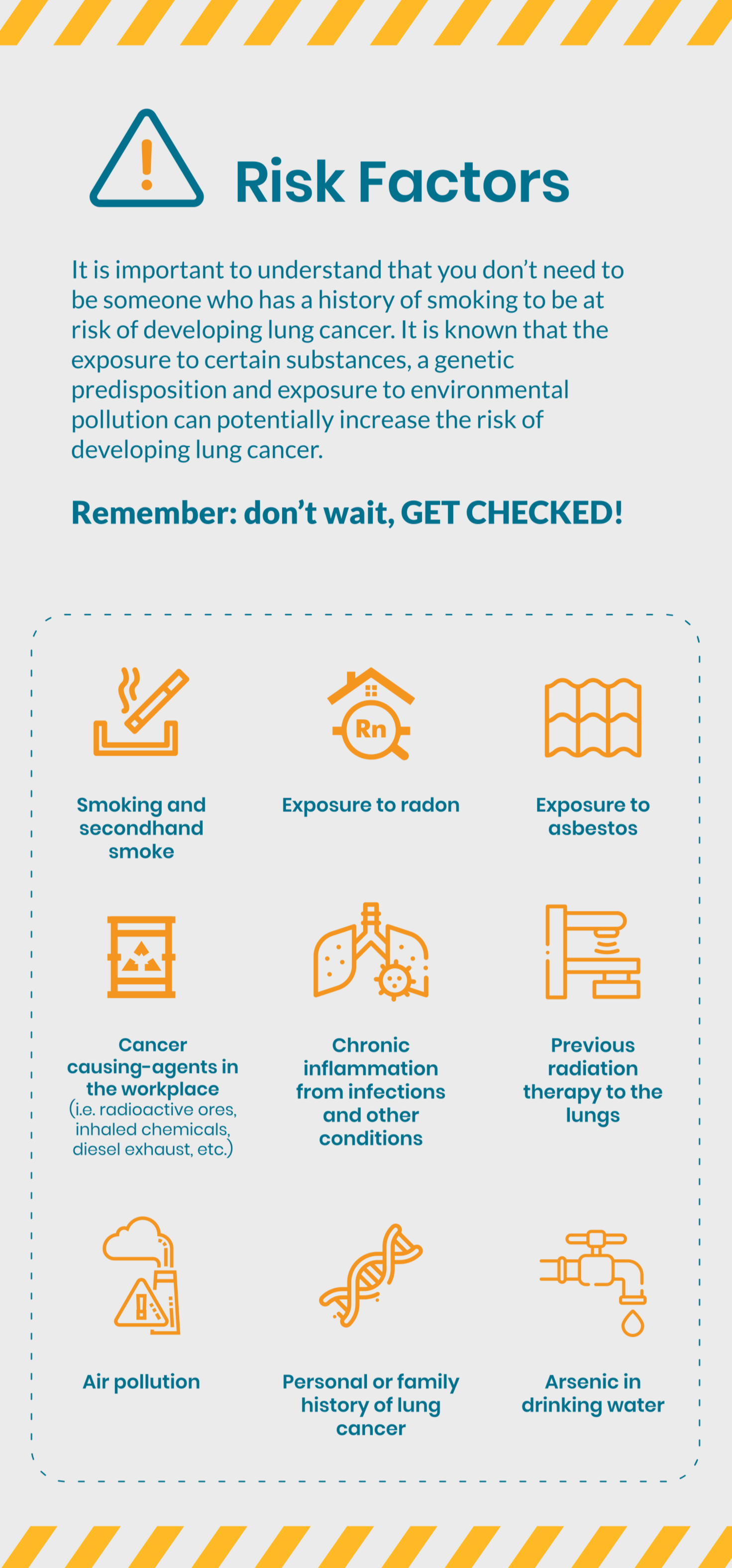
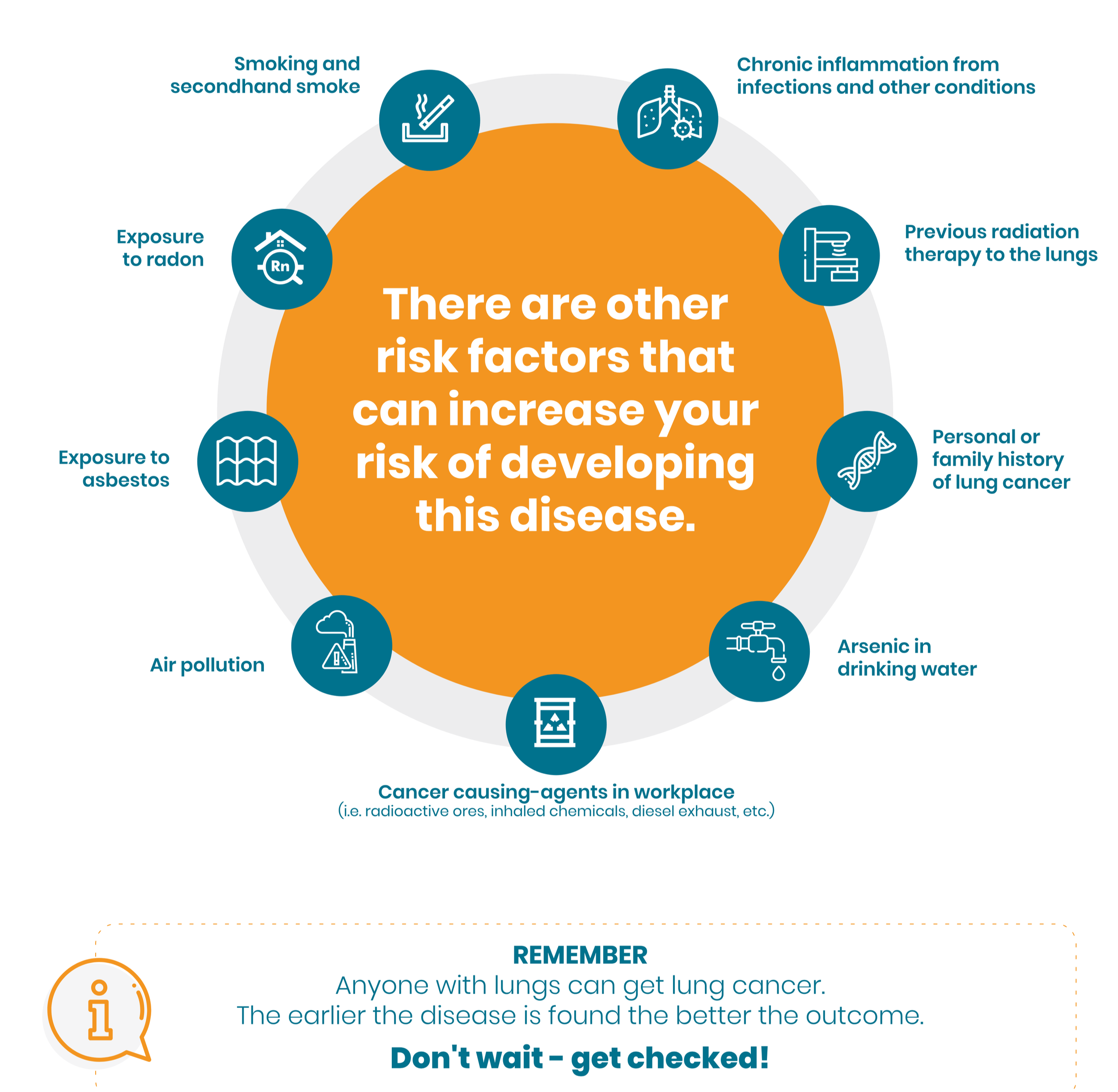
Common risk factors for lung cancer
Smoking or past smoking (including passive smoking)
Air pollution - especially exposure to fine particles over time
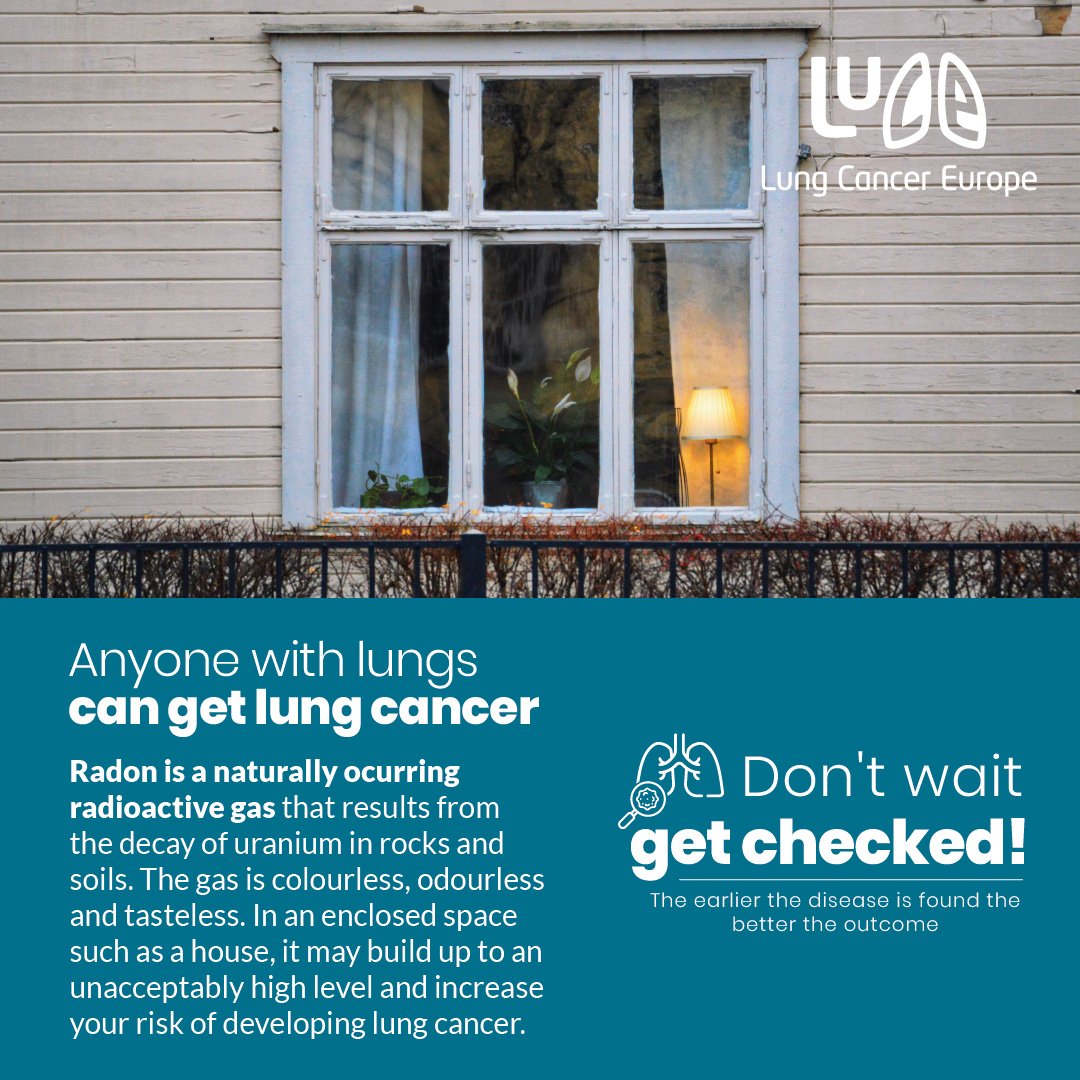
Exposure to radon - a naturally occurring gas found in some homes
Workplace risks - such as exposure to asbestos, diesel fumes or certain chemicals
Family history of lung cancer
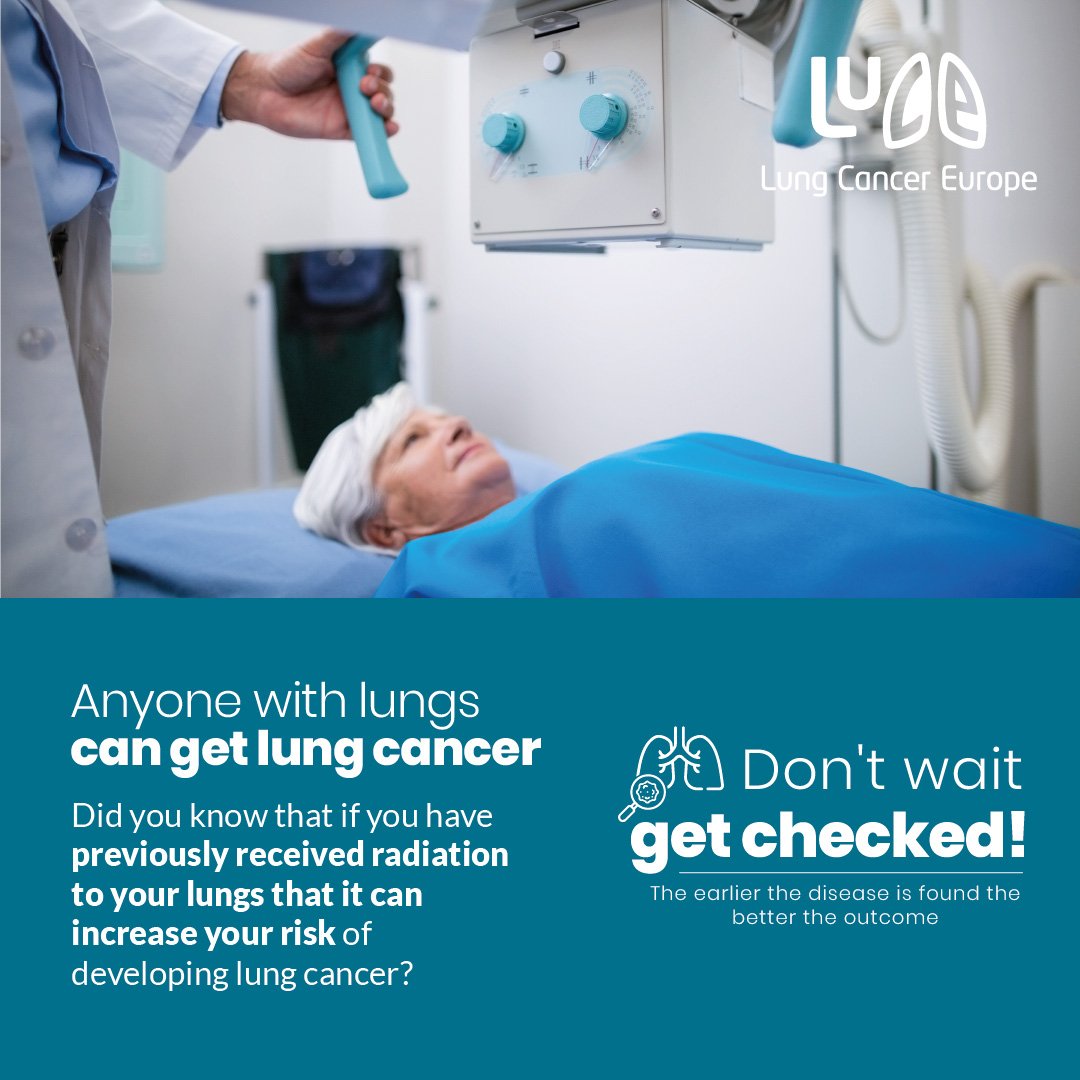
Previous cancer treatments - such as radiotherapy to the chest area
Age - lung cancer is more common in people over 60, but can affect younger people too
Lung conditions - like COPD or pulmonary fibrosis
What increases your risk of lung cancer?
did you know?
did you know?
Around 1 in 8 people diagnosed with lung cancer in Europe have never smoked.
Exposure to pollution and occupational risks is higher in some jobs and communities.
Not all risk factors are within your control - but early detection still makes a difference.