Initially, Katherine put her breathlessness that developed in spring 2025 down to a lack of cardio fitness. But when what seemed like a summer cold developed, her cough felt different, and one morning she noticed a tiny fleck of blood in her sputum, she called her GP practice and was offered a same-day appointment.
“I contacted my GP and I said ‘I think I have lung cancer. I need to see a doctor.’”
Katherine lives in England with her partner, children and pet dachshund. In October 2025, she was diagnosed with limited-stage small cell lung cancer (SCLC). Despite being diagnosed at limited-stage disease, Katherine was made aware of the aggressive nature of SCLC, including the risk of microscopic spread beyond what scans could detect and the possibility of brain metastases.
Signs that seemed easy to justify
In January 2025, Katherine's family caught Covid. Everyone took a long time to recover, and the coughs dragged on. By the spring, she noticed breathlessness when pushing her daughter's pram uphill, and later found herself stopping to catch her breath at the top of the office stairs.
Initially, she attributed this to her fitness and assumed it was a matter of cardiovascular conditioning rather than a problem with her lungs.
She justified shoulder pain with the weight of the bag she carried on her shoulder for work.
At the time, Katherine was aware that her father, an aunt and one grandparent had died from lung cancer. It was only after her diagnosis that she discovered the family history extended further, with two more grandparents also having died from the disease.
Katherine talked to us about her small cell lung cancer diagnosis at our conference in Vienna last April.
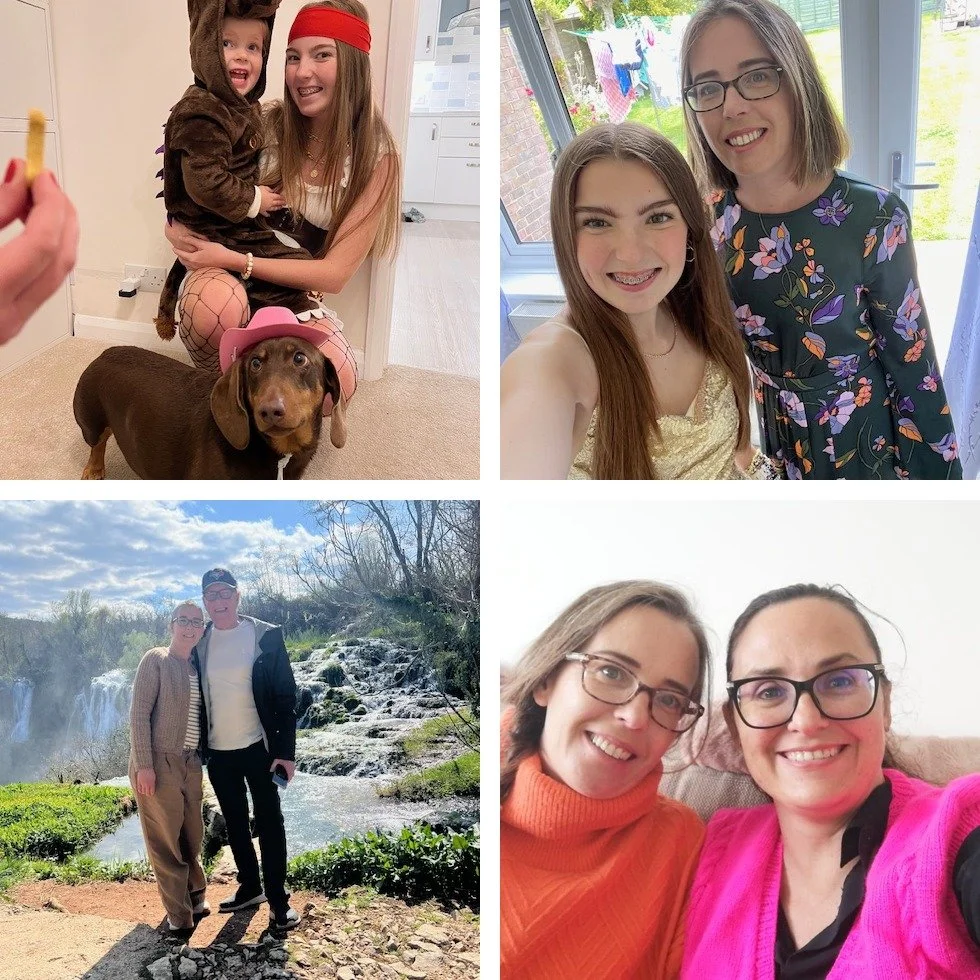
Katherine with her daughters at Halloween and getting ready for Taylor Swift, with her partner, and with a friend who kept her distracted from her new reality.
A cough that felt different
At the end of July 2025, Katherine caught what seemed like a summer cold. A couple of weeks later, her cough began to feel different.
One morning she noticed a tiny fleck of blood in her sputum, prompting her to contact her GP practice straight away.
Listened to in primary care
Katherine saw the paramedic practitioner at her surgery who listened to her concerns and immediately referred her for a chest X-ray and blood tests. He also prescribed antibiotics which completely cleared her cough and shoulder pain.
The X-ray led to an urgent CT scan, revealing a mass in her right lung.
Tests and the challenge to obtain a biopsy
Within two days, Katherine was meeting a respiratory doctor and a lung nurse. She had a PET scan, a brain MRI, breathing tests and a bronchoscopy. Getting a biopsy proved difficult, and it took several attempts before a sample was finally taken under general anaesthetic. The scans showed the cancer had thankfully not spread, and she was told to prepare for surgery.
Small cell lung cancer
But the biopsy changed everything. It revealed small cell lung cancer (SCLC), meaning surgery was no longer an option. Instead, Katherine was faced with a diagnosis known for its aggressive nature and the uncertainty that comes with it.
She met her oncologist the following day, who offered a ray of hope alongside a treatment plan. Katherine underwent four cycles of chemotherapy alongside 33 sessions of radiotherapy, completing initial treatment in December 2025.
A subsequent scan showed no evidence of spread, allowing her to move on to maintenance immunotherapy with durvalumab, which she continues to receive every four weeks.
An unexpected turn
Following further monitoring scans, Katherine was advised that it was likely she had some residual disease. Having researched published studies involving small numbers of patients who had undergone surgery for residual or recurrent disease, she raised the possibility of surgery with her medical team.
After review, it was agreed her case presented a viable opportunity. In July, Katherine underwent a thoracotomy.
An unexpected pathology result
Pathology results brought an unexpected finding: there was no viable SCLC in the resected tissue. However, a separate stage 1A non-small cell lung cancer was discovered, with no identifiable mutations.
In October 2026
Fifteen months on from that initial GP appointment, Katherine has had a clear brain MRI, and her team are quietly confident that her body CT shows no evidence of disease.
She continues immunotherapy alongside regular monitoring and takes a keen interest in developments in lung cancer research and treatment. She is incredibly grateful to the NHS, her medical team and the lung cancer community for their support, shared experiences and for the collective efforts to raise awareness, and bring hope to the many people and families affected by the disease.
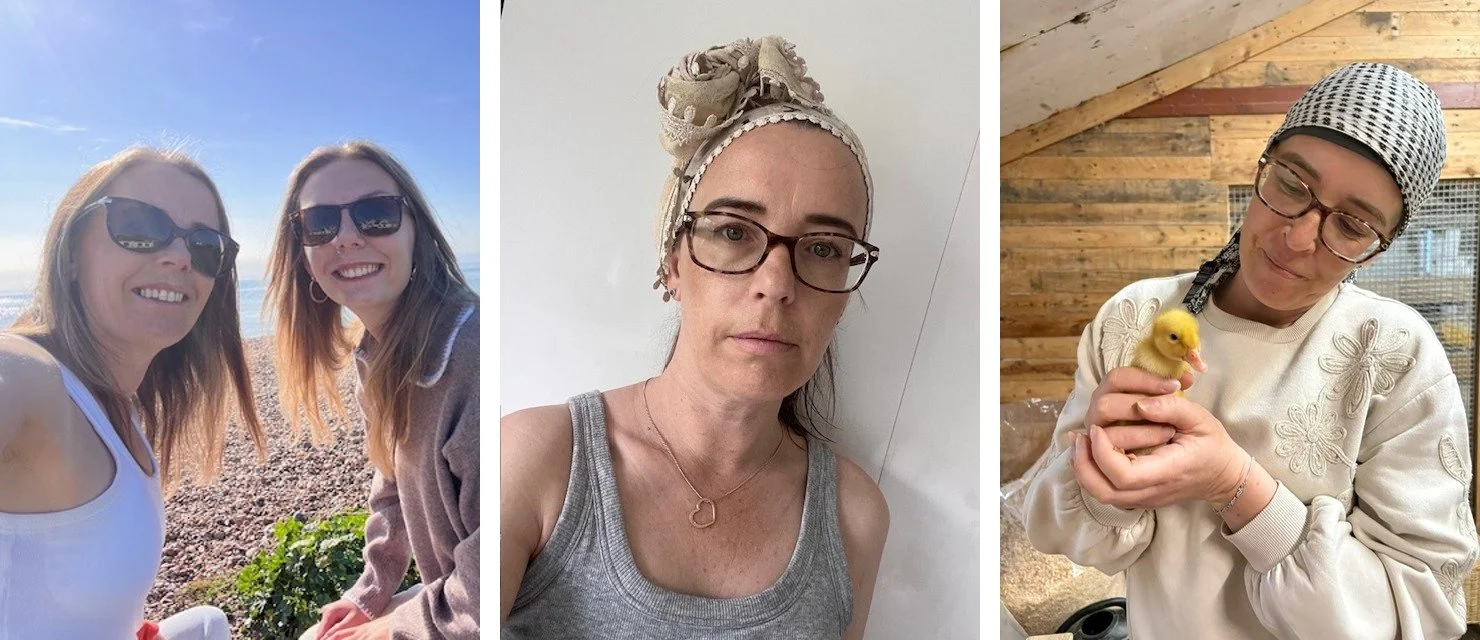
Breakfast and a walk along the beach as a first treatment treat, her first headwear after her hair fell out, and a little duckling. “I think new life provides hope.”
“Still living in limbo is how I would describe living with lung cancer. You never really quite know what’s around the corner, and there’s a great support community out there, so reach out to it.”
What Katherine would change
Katherine believes that if she had been able to self-refer, she would have asked for an X-ray three to four months earlier, after the cough that followed Covid and the breathlessness.
Self-referral chest X-rays are now available in some parts of the UK. Katherine believes these programmes will aid earlier diagnosis of lung cancer and support those not eligible or not in an area that the national lung screening programme covers.
“If we could self-refer with a symptom, it might save more lives.”
The healthcare professional side
Lung cancer nurse Vee Rayson explains why the signs of lung cancer are so often put down to something else, and why many people don't want to bother their doctor.