
Get Checked! 2026 looks at lung cancer diagnosis from both sides. For most people, the first appointment is in primary care, with a GP who may see only a few people with lung cancer each year among thousands of coughs, chest infections and aches that turn out to be something else.
GPs Talk Cancer is a podcast from GatewayC, part of The Christie NHS Foundation Trust, made to support earlier cancer diagnosis in primary care. It is hosted by two GPs. Dr Sarah Taylor is a GP in Manchester, a GP Lead for GatewayC and Associate Medical Director for Greater Manchester Cancer Alliance. Dr Rebecca Leon is a GP partner in East Cheshire and a GP Lead for GatewayC and The Christie School of Oncology. They have kindly let us share their words alongside the stories of people living with lung cancer.
Why lung cancer can be hard to spot in primary care
There are very few nerves inside the lungs, so early lung cancer often can't be felt. When symptoms do appear, they are often vague and easy to explain away: a cough that lingers, breathlessness on the stairs, tiredness, or pain in the chest, shoulder or back. A chest X-ray is a useful first test, but it can't always rule lung cancer out.
“It’s that change, isn’t it? Somebody who could run 10K, who’s now saying they’re struggling with five.”
Lung cancer can affect anyone with lungs
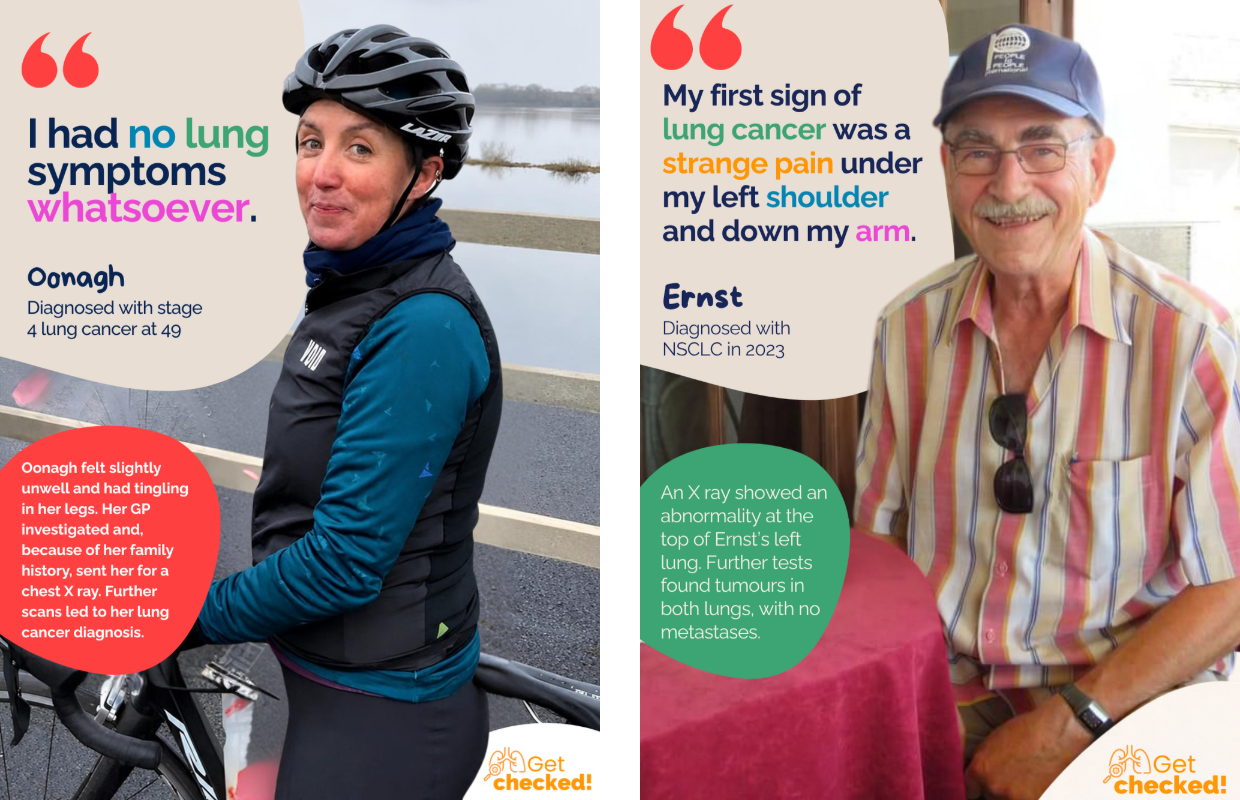
The GPs talk openly about the old picture of who gets lung cancer, and why it no longer fits. Lung cancer is diagnosed in people who are young, fit and active, and in people who have never smoked. When someone doesn't match the picture, it is easy for them and their GP to look for another explanation first.
“If you’ve got lungs, you can get lung cancer.”
“When we used to think about lung cancer, we had a picture in our head of the type of patient who was likely to get lung cancer.”

“I sort of thought, oh, well, they’ve never smoked, so they’re probably okay. And that’s just not the case.”
Going back to your GP when lung cancer symptoms don't settle
GPs often agree a plan with you: if a symptom hasn't improved by a certain time, come back. This is called safety netting. If a test result is normal but you still feel unwell, going back is the right thing to do. When the same symptoms return again and again without a clear reason, the GPs say that is the moment to think about referring on.
“If you’ve got somebody who comes back with the same symptoms three times and you haven’t got a really clear reason for it, you need to think about referring them on.”
“If I text somebody to say that their chest X-ray is normal, I also add on: if your symptoms haven’t settled, please come back and see me.”
“My nose started twitching. You call it the GP gut instinct, or you call it the GP nose.”
Listen to GPs Talk Cancer
The podcast is made for primary care clinicians, but many episodes, including Lung cancer: GP gut instinct, normal chest X-rays and what to do next, are clear and useful for anyone. Healthcare professionals can also find free early diagnosis learning on GatewayC.
Quotes shared with permission from GPs Talk Cancer, from GatewayC, part of The Christie NHS Foundation Trust.

The lived experience side
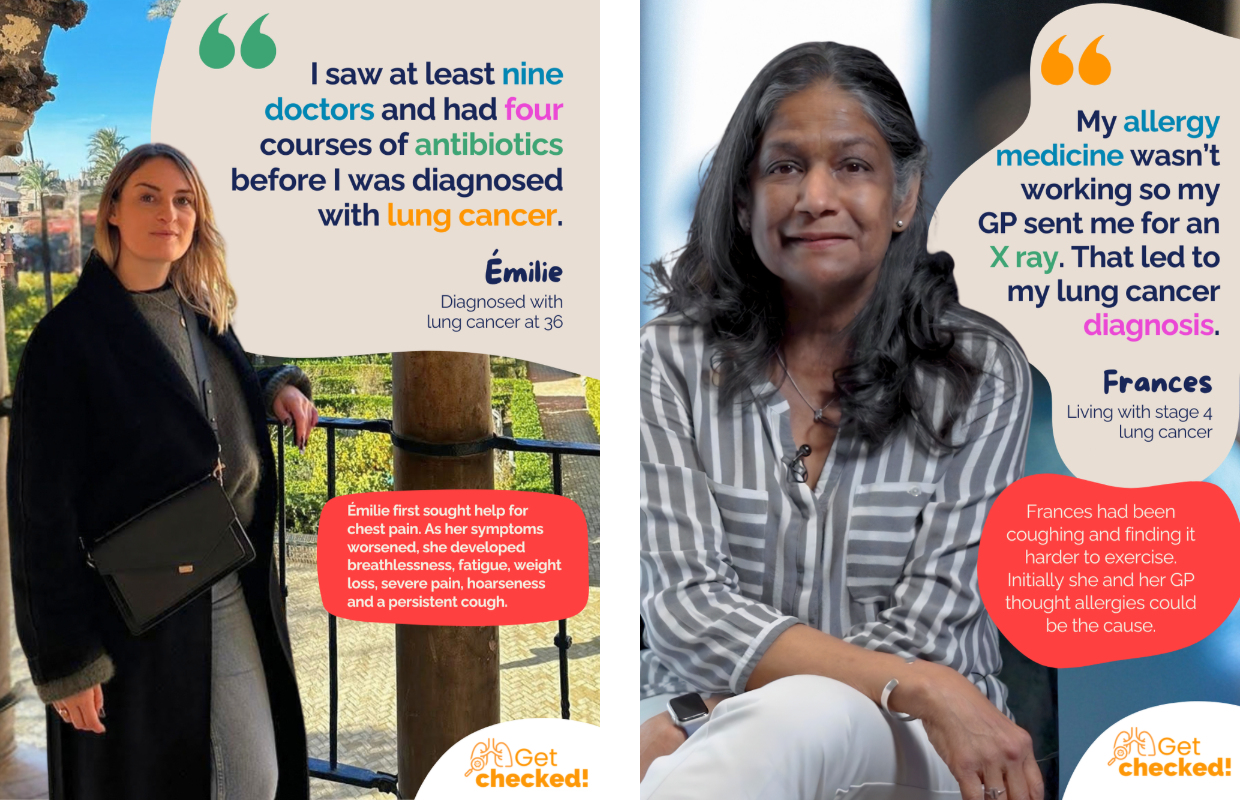
Émilie saw at least nine doctors before she was diagnosed with lung cancer at 36.