Inside the lung cancer diagnosis pathway
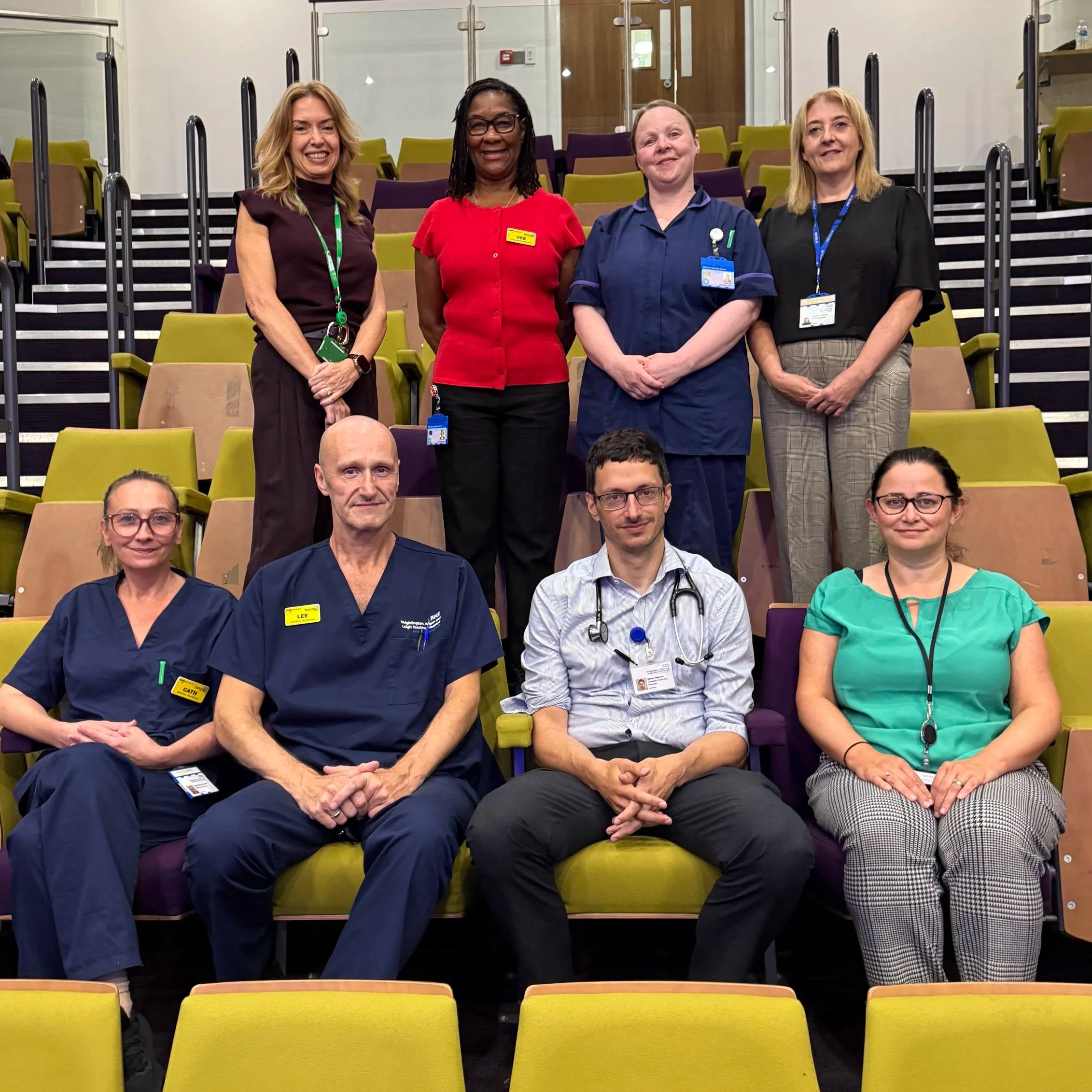
When lung cancer is suspected, a whole team starts working on someone's behalf, often without them ever knowing. Many people are referred by their GP, but others come through A&E, a hospital stay, a scan for something else, or lung screening. Whichever way they arrive, the same team supports them. In August 2026, the lung cancer team at Wrightington, Wigan and Leigh Teaching Hospitals NHS Foundation Trust walked us through every step of their rapid diagnostic pathway. These are some of the people behind it.
Leading the team
Vee Rayson is Lead Clinical Nurse Specialist for lung cancer and bronchoscopy at the trust, and she organised our visit. Her team of lung cancer nurse specialists is often the first point of contact after a scan has found something. When they talk to someone about their scan, they don't tell them they have lung cancer. They explain that something looks suspicious, and that tests will find out more.
Day zero starts with a referral
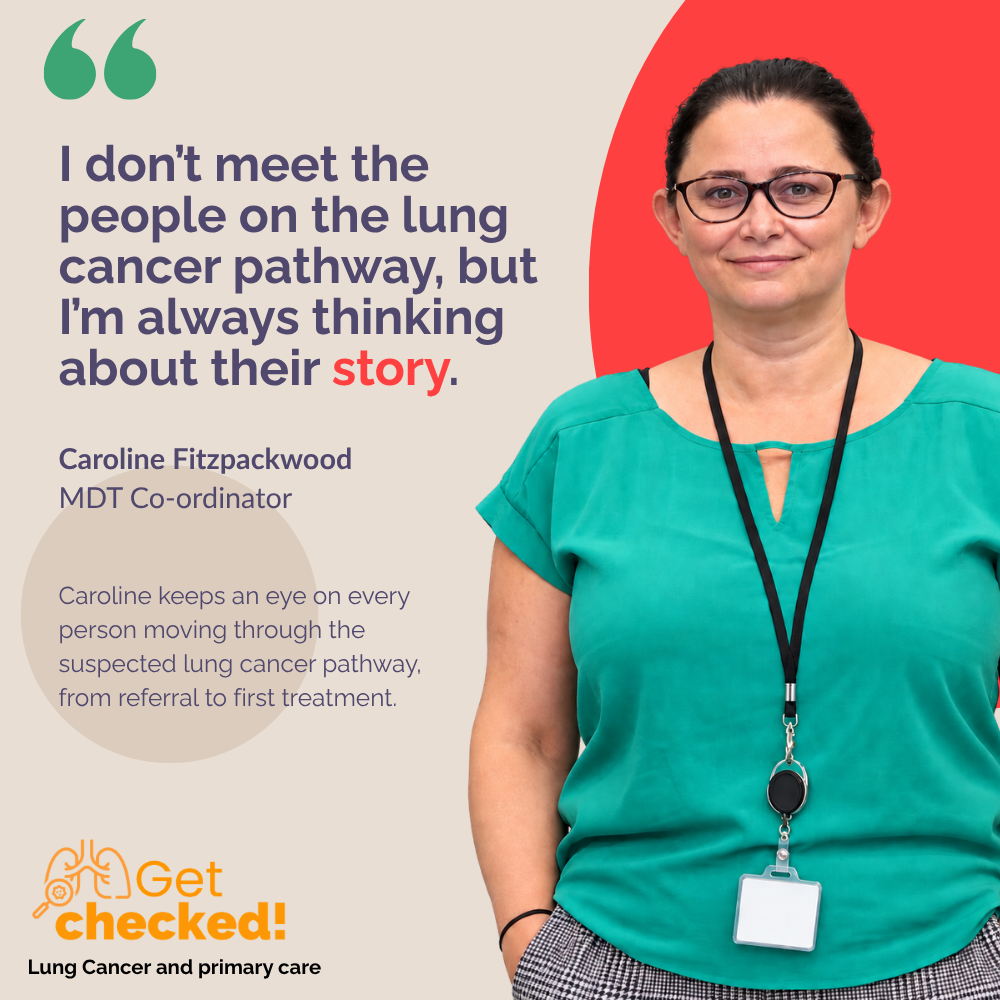
Caroline Fitzpackwood is the team's MDT Co-ordinator. She tracks every person on the suspected lung cancer pathway, from the moment a referral arrives to the start of treatment. For her, the day a referral comes in is day zero, wherever it comes from, and nobody is ever left off her list.
A phone call, not a letter
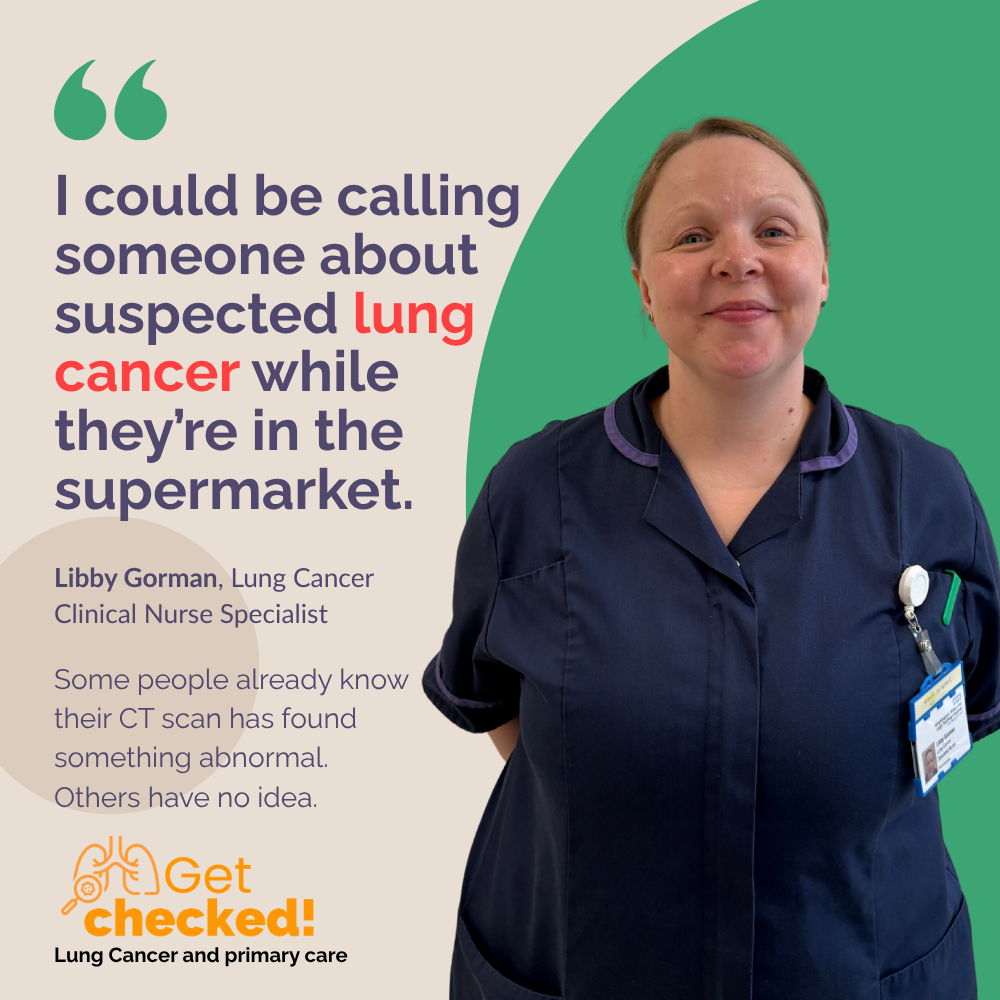
In Wigan, support starts before there is a diagnosis. When a scan has found something, one of the lung cancer nurse specialists rings the person to talk it through and explain what happens next.
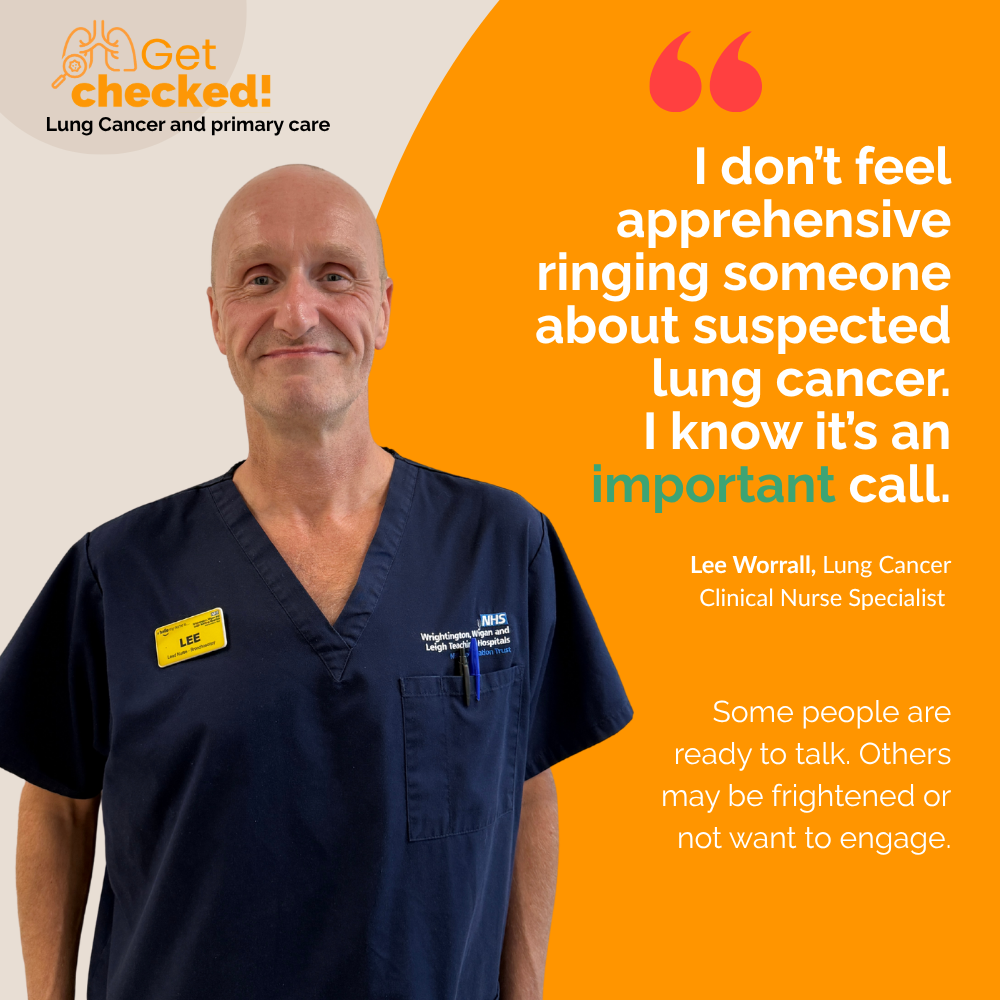
Libby Gorman and Lee Worrall make many of these calls. Some people already know their scan has found something. Others have no idea, and some have assumed that hearing nothing was a good sign. Lee knows each one is an important call, and believes in being open and honest from the start, so people understand what is happening. The nurses also give people time to take it in, because questions often come later.
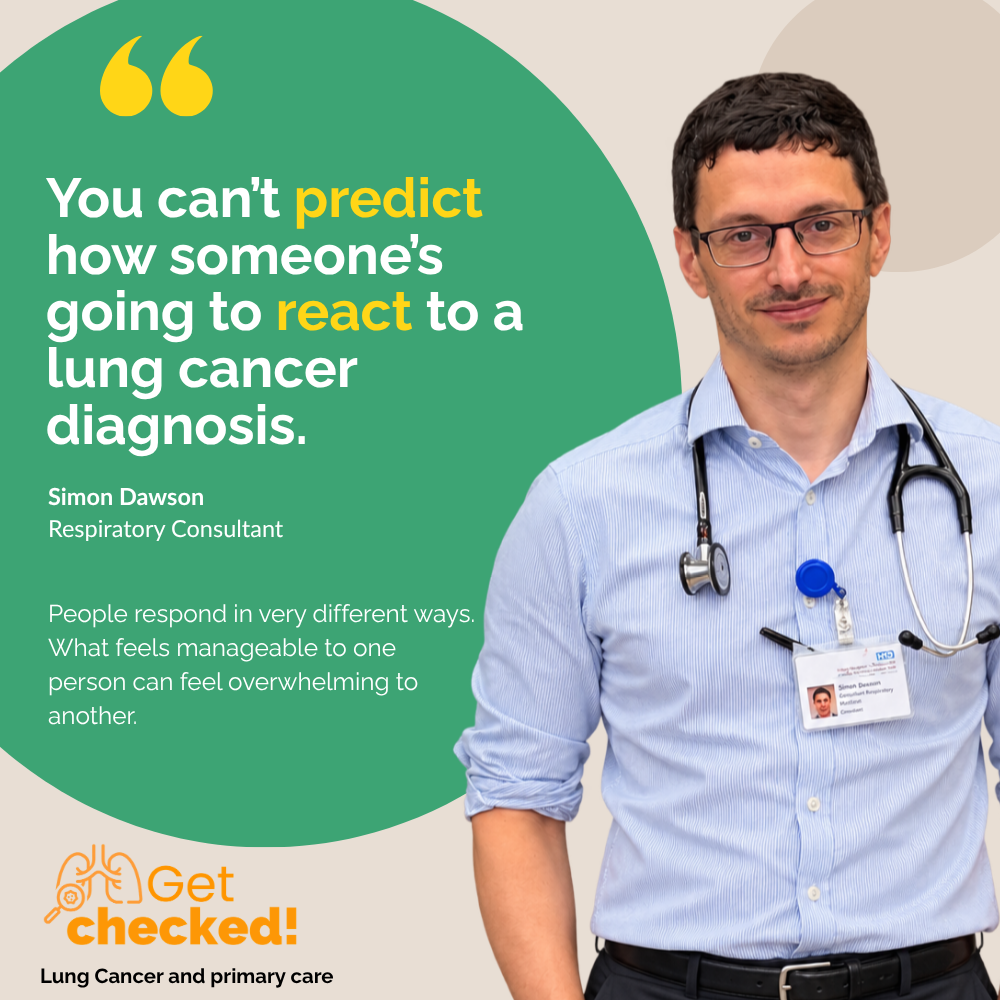
Suspected lung cancer is not a diagnosis
But it does mean tests and appointments, and that can feel overwhelming. Respiratory Consultant Simon Dawson sees people at every stage of the pathway.
Some people want to put things off until they can face them. Others take difficult news calmly.
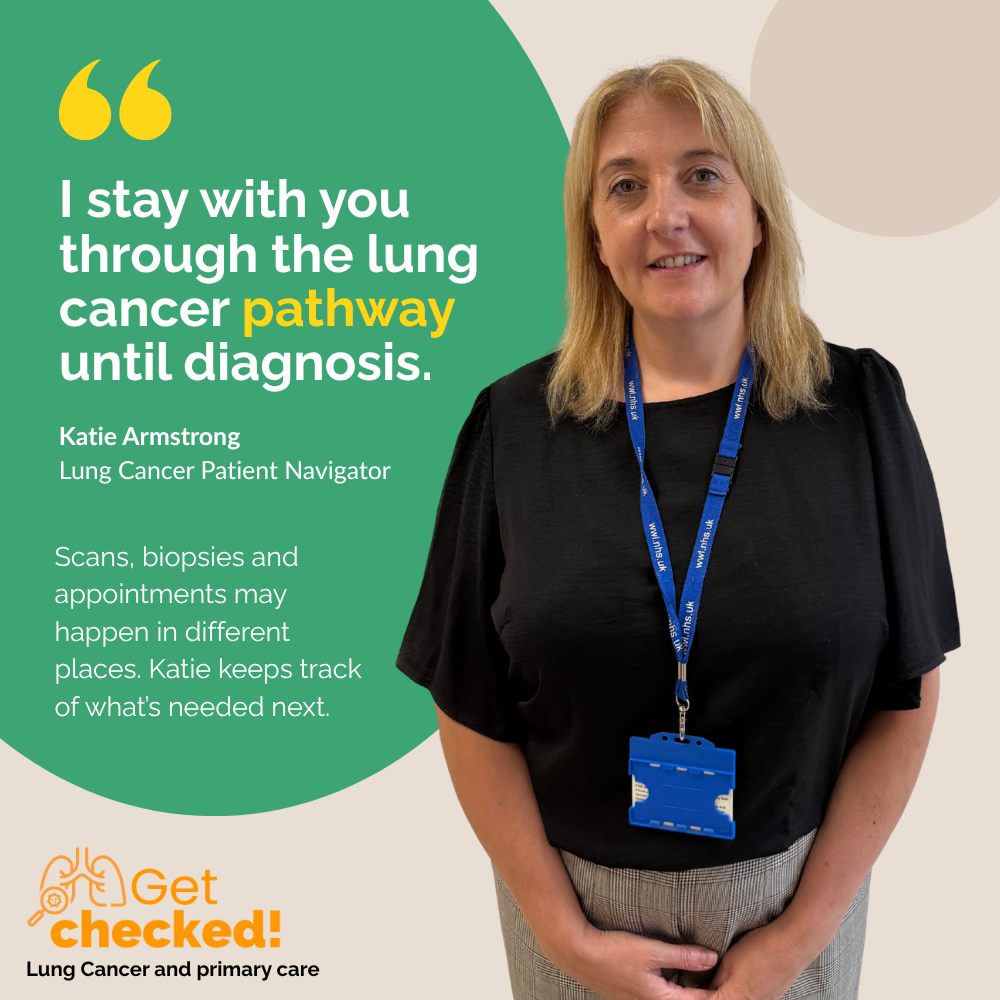
Someone to keep track of every appointment
Scans, biopsies and appointments can happen in different places, and it is a lot to keep on top of. Katie Armstrong, the team's Lung Cancer Patient Navigator, stays with each person through the diagnostic stage, making sure they know what comes next.
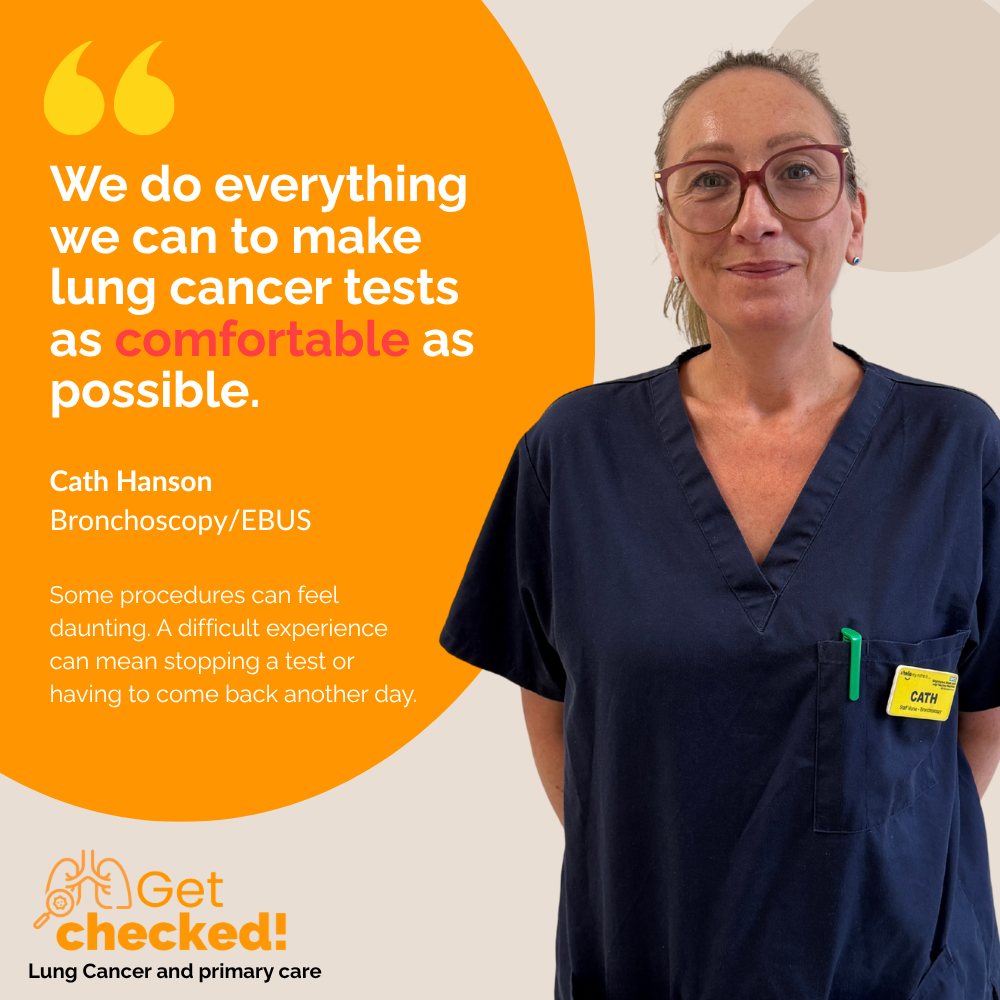
Making tests less daunting
Cath Hanson leads bronchoscopy and EBUS, tests that use a thin camera to look inside the airways and take samples. People often arrive worried, so Cath starts by asking whether they have had a camera test before. Her team does everything it can to make the tests as comfortable as possible, and makes sure everyone leaves with a phone number to call.
Support from the first phone call
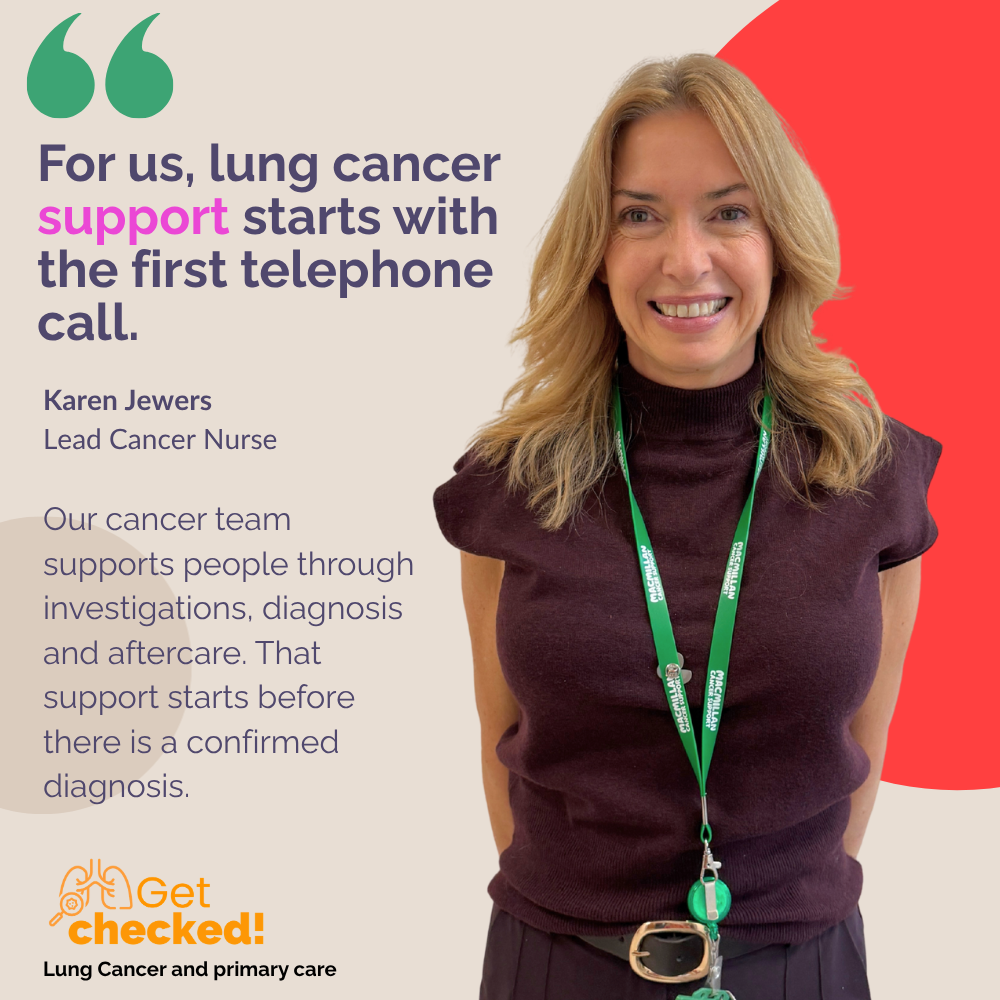
Karen Jewers, Lead Cancer Nurse, describes a team that supports people through investigations, diagnosis and aftercare, beginning with that very first call. The lung cancer nurses want people to get in touch whenever they need support, rather than worrying about being a bother.
And for many, there is life after treatment. Simon sees people in clinic who are years past their operation, and asks them where they are going on holiday this year.
The lived experience side
Vee also knows lung cancer as a wife. Her husband Paul had none of the symptoms most people expect.
“I knew something wasn’t right. You must to listen to that little alarm bell.”
With thanks
This year's Get Checked! campaign looks at both sides of lung cancer diagnosis. To understand the professional side properly, we needed to see it for ourselves. In August 2026, the lung cancer team at Wrightington, Wigan and Leigh Teaching Hospitals NHS Foundation Trust opened their doors to us. Led by Vee Rayson, Lead Clinical Nurse Specialist for lung cancer, the team took us through every step of their rapid diagnostic pathway, from the first abnormal scan to the moment someone hears their results. We heard from the MDT co-ordinator, a respiratory consultant, the lung cancer nurse specialists, the pathway navigator, and the bronchoscopy and CT biopsy teams. Every one of them gave us their time, answered our questions, and showed us how much they care about the people they support.
Our special thanks to Vee, and to Lung Cancer Nursing UK, a member of Lung Cancer Europe, for making the visit happen and for everything they have contributed to this campaign. The team's knowledge, honesty and passion run through everything you see on this site.